
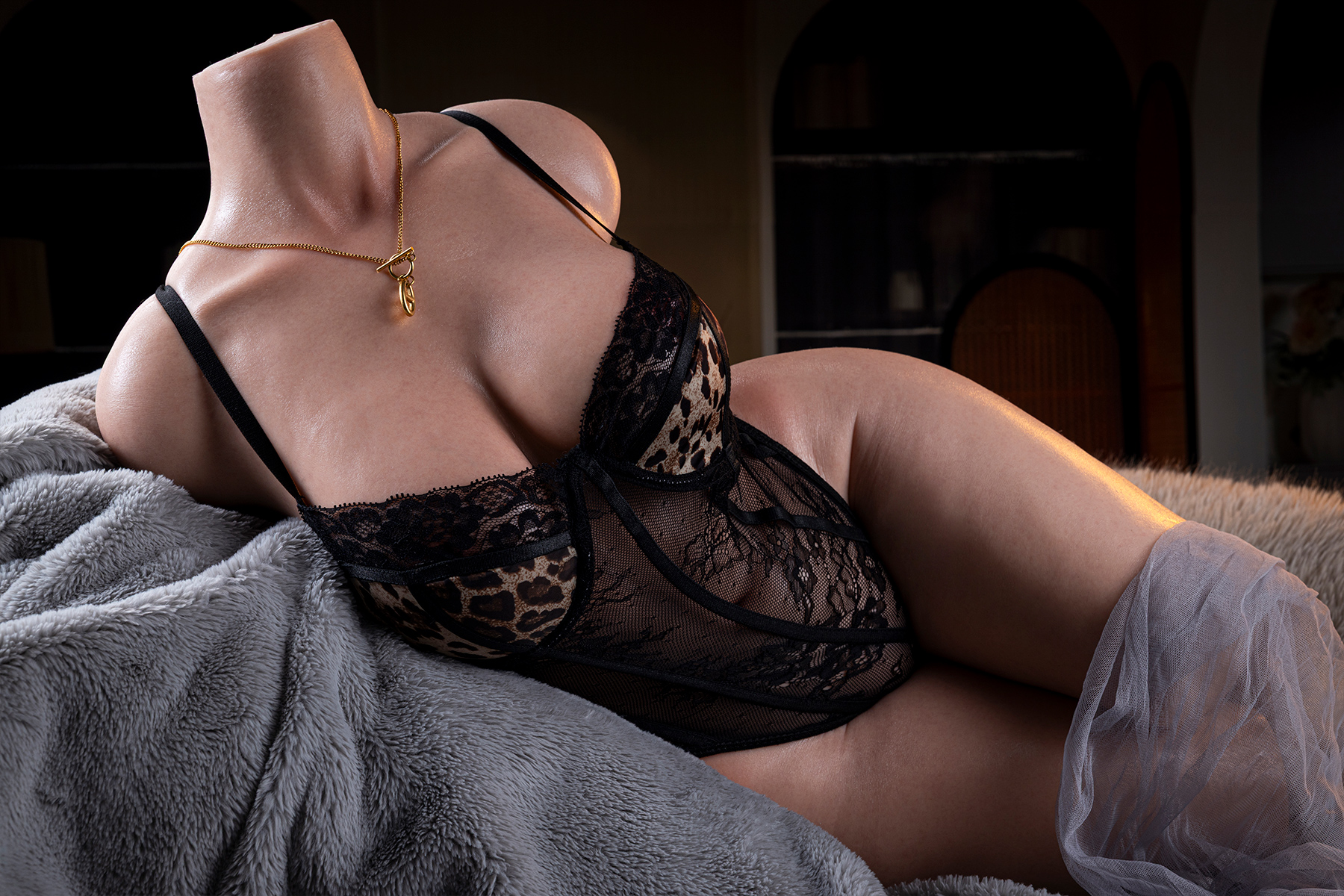
Platinum Silicone vs. TPE Sex Dolls: Which Material Is Right for You?
Touch a TPE doll and a platinum silicone doll for the first time, and you may notice the softness before anything else.
Live with one for a while, though, and the differences that matter start to change.
How well does the surface hold fine skin detail? How much care does it need? Does it pick up lint easily? How does it age? And how much are you willing to spend for a more refined finish?
That is a better way to approach the silicone-versus-TPE question.
Neither material can be reduced to “good” or “bad.” They simply prioritize different things.
Start With What the Materials Actually Are
TPE stands for thermoplastic elastomer. It combines characteristics associated with rubber and thermoplastics and is widely used for dolls because it can be made very soft and flexible at a relatively accessible cost.
Platinum silicone is different. It is a silicone elastomer cured using a platinum-catalyzed system.
For a finished doll, the chemistry matters less than what that chemistry allows the manufacturer to achieve: surface definition, material stability, softness, elasticity and the way the product can be maintained over time.
If Softness Is Your First Priority
TPE has a genuine advantage here.
Many TPE formulations can feel extremely soft, yielding and compressible. That is one reason TPE remains popular even as premium silicone products become more common.
Platinum silicone should not automatically be described as “softer than TPE.” That would be misleading.
Silicone can be engineered in different softness levels, and premium torso designs can use softer zones or specialized formulations, but its strengths are broader than softness alone.
What silicone often offers is a different kind of tactile quality: a cleaner, more stable surface combined with good rebound and precisely formed details.
So ask yourself:
Do I simply want the softest possible body, or do I care equally about surface realism, finish and long-term ownership?
That distinction makes the decision easier.
Where Platinum Silicone Really Shows Its Strength: Detail
Look closely at a well-made silicone torso.
The difference is not necessarily something dramatic from ten feet away. It appears in smaller places: subtle skin texture, tiny creases, transitions between body contours and the way sculpted details remain defined.
Silicone is particularly well suited to reproducing fine mold detail. This is one reason it is attractive for a torso where the body itself is the visual focus.
At Tinglise, realism is not treated as one feature added at the end. Body sculpting, skin texture, coloring and material selection all contribute to the finished appearance.
A realistic body shape with a flat, artificial-looking surface still feels unfinished.
So does beautiful skin texture on an unnatural body.
The two need to work together.
Cleaning Changes the Ownership Experience
Material choice also affects what happens after you stop looking at the product and start owning it.
TPE generally requires more attention because its surface characteristics can make maintenance more involved. Depending on the formulation, owners may also use care powder to manage tackiness.
Silicone is typically easier to incorporate into a straightforward cleaning routine and does not require the same powdering routine associated with many TPE dolls.
That difference might sound minor when you are shopping.
After dozens of cleaning cycles, it stops feeling minor.
For a product designed to be used repeatedly, ease of maintenance is part of product quality—not an afterthought.
What About Durability?
This is where online comparisons often become too absolute.
You will see claims that one material lasts a specific number of years while another lasts several times longer. Real ownership is not that predictable.
Material formulation matters. So do wall thickness, internal construction, frequency of use, cleaning products, storage, temperature, friction and how aggressively the product is handled.
In general, platinum-cured silicone is valued for material stability, heat resistance and its ability to maintain shape and surface characteristics over time.
But even premium silicone is not indestructible.
Thin areas can still tear. Excessive stretching can still cause damage. Poor storage can still leave marks.
Premium material reduces compromises; it does not eliminate the need for care.
Why Does Platinum Silicone Cost More?
Part of the difference comes from raw material and manufacturing cost.
But when evaluating a finished torso, material alone should never justify the entire premium.
You should also be getting better molding, cleaner seams, convincing skin finishing, thoughtful softness, better construction and stronger quality control.
A mediocre torso does not become premium simply because someone puts “platinum silicone” in the product title.
That is an important distinction.
So Which Should You Buy?
Choose based on your priorities rather than the material name alone.
If maximum softness and a lower entry price matter most, TPE remains a practical choice.
If you place greater value on fine surface detail, easier routine care, material stability and a more refined overall finish, platinum silicone torso dolls become much more compelling.
For Tinglise, that second set of priorities is exactly why we focus on platinum silicone.
Not because TPE has no strengths.
Because we believe a torso should still feel premium after the first impression wears off.